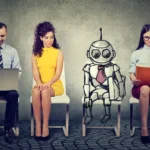

Artificial intelligence (AI), sometimes known as machine intelligence, refers to the ability of computers to perform human-like feats of cognition including learning, problem-solving, perception, decision-making, and speech and language.
Early AI systems had the ability to defeat a world chess champion, map streets, and compose music. Thanks to more advanced algorithms, data volumes, and computer power and storage, AI evolved and expanded to include more sophisticated applications, such as self-driving cars, improved fraud detection, and “personal assistants” like Siri and Alexa.
Today, researchers are using AI to improve predictions, diagnoses, and treatments for mental illnesses. The intersection of machine learning and computational psychiatry is rapidly creating more precise, personalized mental health care.
Contents
- Artificial Intelligence Now and In the Future
- Artificial Intelligence and Mental Health
- The Ethics of Artificial Intelligence
Artificial Intelligence Now and In the Future

Artificial intelligence as it is used today is considered “weak AI,” because it is generally designed to perform just one or two specific tasks as well as, and often better than, humans. At this point, however, the controversial future of AI research includes ideas about developing “strong AI,” or a super-intelligence, with the potential to perform many or all cognitive tasks better than humans. AI safety research is a priority for some scientists concerned about potential dangers if such advanced technology gets into the wrong hands, although others still question the possibility of ever achieving human-level strong AI.
How is AI being integrated into daily life?
People often possess an array of devices that incorporate artificial intelligence. For example, devices that leverage centralized home-management systems adjust thermostats. Wearable gadgets push their users to exercise or consider their food choices. Smartphones and tablets complete words and sentences as people type emails and texts. Autonomous vehicles are already in use on city streets.
How is AI being integrated into the workforce?
Machines have already transformed the jobs of millions of people—by monitoring actions that couldn’t previously be tracked, calculating data in new ways, guiding decision making, or taking over tasks. For example, drones photograph and monitor some construction sites for discrepancies. Some probation officers handle their cases according to instructions from a computer program, which decides how much of a risk each person poses. Algorithms write reports for some publications.
How do humans view algorithms?
What challenges emerge in human-machine interactions?
How do people view sex robots?
Artificial Intelligence and Mental Health

Artificial intelligence has the potential to reshape psychiatry—and those efforts are already well underway. Amassing massive datasets can allow scientists to identify factors that render people more vulnerable to mental illness, improve the accuracy of diagnoses, and assess which treatments are effective and for whom.
The field of computational psychiatry leverages mathematical and computational tools to improve the understanding, diagnosis, and treatment of mental disorders.
What information could AI provide about mental health?
Computational psychiatry has the potential to gain insight into any condition with a large enough dataset. Machine learning could identify which genes contribute to the development of autism or the factors that render adolescents vulnerable to binge-drinking such as brain size or parental divorce. These programs could reveal which systems are affected by dopamine in patients with Parkinson’s disease, or a person’s risk for depression based on factors such as sex and childhood trauma.
Could AI help diagnose bipolar disorder?
Artificial intelligence has the potential to leverage large datasets to improve diagnoses and reduce misdiagnoses. For example, depressive episodes in bipolar disorder and depression can be difficult to distinguish; many patients with bipolar are misdiagnosed with major depressive disorder. A machine learning algorithm that used self-reports and blood samples recently identified bipolar disorder patients in various scenarios, potentially providing a helpful supplement for clinicians in the future.
Could AI help diagnose autism?
Could AI help diagnose schizophrenia?
Can AI help treat mental illness?
Can AI accelerate drug discovery?
The Ethics of Artificial Intelligence

The evolution of artificial intelligence has led to countless ethical questions. Will machine learning perpetuate bias and inequality? Will AI infringe on human privacy and freedoms? Will humans lose their jobs to robots? Will machines become more intelligent than humans?
People are right to question the nature of machines that can evolve on their own. By actively engaging with these concerns, hopefully humans can develop ethical systems of artificial intelligence moving forward.
Why does the technology sector pose unique ethical challenges?
People interact with technology on an unprecedented scale and in many different environments—at work, in the supermarket, in the car, at home. Technology deployers have some responsibility to keep people safe as AI poses ethical challenges. Whether it’s anticipating systemic bias, recognizing when technologies coerce decision-making, intercepting malicious actors who wish to weaponize platforms, or taking a stand on overzealous surveillance, creators and consumers need to make sure that technology serves the population well.
What are some underappreciated ethical concerns about AI?
One ethical concern about artificial intelligence is the potent yet subtle influence of technology on people’s choices and decision-making. Companies are able to use all of the information they store about people to their advantage—“nudging” people towards decisions that are predominantly in the company’s interests. Another concern may arise from the technologies that claim to be able to read and interpret human emotions. The idea of a product deceiving a child or vulnerable adult into believing it truly “understands them,” and thereby influencing them, is worrying.
Artificial Intelligence (AI) describes the simulation of human intelligence in machines that are conditioned to think and learn like humans. It is a multidisciplinary discipline that mixes computer science, mathematics, psychology, and other areas to develop intelligent systems. According to Next Move Strategy Consulting, the market for artificial intelligence (AI) is expected to show strong growth in the coming decade. Its value of nearly 100 billion U.S. dollars is expected to grow twentyfold by 2030, up to nearly two trillion U.S. dollars.
One of the essential parts of AI is Machine learning where algorithms allow machines to absorb data and improve their performance over time without explicit programming. Deep learning, a section of machine learning, directs synthetic neural systems inspired by the structure and purpose of the human brain to process and analyze complicated patterns and data.
AI applications are wide-ranging and could revolutionize various industries and domains. For example, AI is used in image and speech recognition systems, virtual personal assistants like Siri and Alexa, autonomous vehicles, recommendation systems, fraud detection, medical diagnosis, and many more.
There are many organizations and individuals working in the research and development of the AI industry. Here are some key players:
- Tech Giants: Companies such as Google, Microsoft, Apple, and other internet-accessible companies are doing AI studies in relation to their own products and services. Using research based on user input, they can develop their own AI and raise it to appeal to their target audience. Within the past year, Google has released its own form of AI known as Google Bard, a new form of conversational AI.
- Research Institutions: Prestigious research institutions such as Stanford University, Massachusetts Institute of Technology (MIT), Carnegie Mellon University, Oxford University, and University of California, Berkeley, among others, conduct cutting-edge research, publish influential papers, and contribute to the advancement of AI technologies.
- Startups: Several AI startups have emerged in recent years, focusing on specific AI applications and developing AI-driven products and services. These startups often create new technologies and approaches, attracting attention and investments from venture capitalists and large companies.
- Government Agencies: Governments around the globe are acknowledging the magnitude of AI and investing in AI research and development. National research agencies, defense organizations, and intelligence agencies often have dedicated AI programs and initiatives. For example, the Defense Advanced Research Projects Agency (DARPA) in the United States has funded considerable AI projects.
- Non-profit Organizations: Numerous non-profit organizations are actively involved in AI research and advocacy. OpenAI, the organization behind ChatGPT, is one such example. Other notable organizations include the Allen Institute for Artificial Intelligence (AI2), the Partnership on AI, and the Future of Humanity Institute.
- AI Experts: Individual researchers, scientists, and academics play a key role in AI advancement. They have published leading papers, developed new algorithms and models, and participated in conferences and events to share knowledge and collaborate with others.
- Industry-specific AI Applications: Several industries, including healthcare, finance, manufacturing, transportation, and entertainment, have their own set of key players in AI. These could be companies adopting AI technologies to improve their operations.
People should know about Artificial Intelligence for several reasons:
- Employment and the future of work: AI is changing the job market by automating recurring tasks and augmenting human capabilities. By understanding AI, people can adapt to changing job requirements and make informed career choices.
- Ethical considerations: AI increases important ethical considerations. There are concerns about predisposition in algorithms, privacy issues, and the potential impact on societal structures.
- Decision-making and critical thinking: As AI techniques become more complex, they are progressively involved in decision-making processes that affect individuals’ lives. It helps prevent blindly accepting AI-generated results without considering potential biases or errors.
- Innovation and entrepreneurship: AI is driving innovation across various industries, from healthcare to finance to transportation. By understanding AI concepts and capabilities, individuals can identify opportunities for innovation, develop AI-driven solutions, and contribute to the advancement of technology and society.
- Empowerment and agency: Knowledge about AI allows people to understand how their data is being used so that they can make educated choices about privacy settings, and safeguard themselves from potential dangers associated with AI-driven technologies.
- Collaboration with AI systems: Understanding how to positively collaborate with AI systems, power their strengths, and identify their limitations will be critical for individuals to be successful in a future where AI is prevalent.
Overall, AI is changing various viewpoints of our lives, and being informed of its capabilities, implications, and limitations is vital for human beings to actively be part of the digital age and make informed decisions.
The University of Central Florida Business Incubation Program is a community resource that provides early-stage companies with the tools, training, and infrastructure to become financially stable, high growth/impact enterprises. Since 1999, this award-winning program has provided vital business development resources resulting in over 300 local startup companies reaching their potential faster and graduating into the community where they continue to grow and positively impact the local economy.
With eight facilities throughout the region, the UCF Business Incubation Program is an economic development partnership between the University of Central Florida, the Corridor, Orange, Osceola, Seminole, and Volusia Counties, and the cities of Kissimmee, Orlando, and Winter Springs. For the 2017/2018 fiscal years, the activities of these participating firms have helped to sustain more than 6,725 local jobs and have had a cumulative impact of over $725 million on regional GDP and over $1.3 billion on regional sales. During the same period, the program has returned more than $12.00 in state and local taxes for every $1.00 invested in the program. In addition, for every $1.00 of public investment, the firms also produced $118 of additional regional GDP and $226 of regional sales. For more information, visit www.incubator.ucf.edu.